Vaishnavi Khindkar

Vaishnavi Khindkar

I am a Master's student in Computer Vision (MSCV) at the School of Computer Science (Robotics Institute), Carnegie Mellon University, where I work with Prof. Andrej Risteski on the theory of generative modeling and sampling, and with Prof. László A. Jeni on object-centric 4D reconstruction. I am also a Machine Learning Engineering Intern at Sync Labs, working on video generative AI and lip-sync pipelines. Earlier at CMU, I worked with Prof. Fernando De la Torre on diagnosing aerial object detectors with foundation generative models.

Before CMU, I spent several years at IIIT Hyderabad. As a Research Scientist at CVIT, I worked with Prof. C. V. Jawahar, Prof. Vineeth N. Balasubramanian, and Prof. Chetan Arora on autonomous-driving perception, pedestrian-intent prediction, and domain-adaptive detection, work that led to publications at IROS 2024 and WACV 2022, one U.S. patent, and two Indian patents. As an Applied AI Researcher at Product Labs, I also contributed to Bhashini, the Government of India's national language-AI mission. I hold a B.E. in Computer Science from Savitribai Phule Pune University.

Outside research, you'll usually find me at the piano, singing, swimming, running, meditating, or lost in a good book, with a soft spot for भक्ती संगीत, अभंग, and sci-fi (Iron Man, always). Giving back matters to me too: I've mentored students through AI4ALL and taught schoolkids to code.

Research interests
Generative Modeling Spatial Intelligence 3D & 4D Scene Understanding World Models Autonomous Driving Robotics

Research

My path into research started with a question I couldn't let go of as an undergrad: what would the next revolution in computing really look like? I was fascinated by the mathematics beneath how things work, especially the structure and uncertainty behind intelligent behavior. Half-seriously and half inspired by Iron Man's Jarvis, I became captivated by the idea of mind-reading computers: machines that could grasp intent and understand the why behind what people do. That, to me, was the frontier worth chasing.

That fascination with intent grew into a research program. At CVIT, I worked on reading pedestrian intent and modeling object-scene interaction, using causal, explainable models to predict not just what an agent will do, but why, alongside earlier work on domain adaptation, spatio-temporal reasoning with graph networks, and generative augmentation, all tied to the broader question of how machines can understand behavior in complex, changing environments.

Over time, this question pulled me one level deeper. To understand why agents act, we also need to understand the worlds they act within: the geometry of a scene, how objects move, how interactions unfold, and how these dynamics persist over time. This shift drew me toward computer vision, generative modeling, and spatial intelligence, especially models that go beyond simply perceiving a scene, and instead reconstruct how the world unfolds across space and time.

Right now I'm pursuing two complementary threads: with Prof. Andrej Risteski, the theory of reward-tilted sampling, on how to steer generative models toward desired outcomes in a principled way; and with Prof. László A. Jeni, Slot4D, an object-centric approach to 4D reconstruction that links low-level geometric tracking to object-level scene understanding.

Across these projects, I am interested in a broader question: how can we build models that move beyond perception alone: models that understand structure, dynamics, intent, and the physical worlds in which intelligent behavior unfolds?
News

Publications

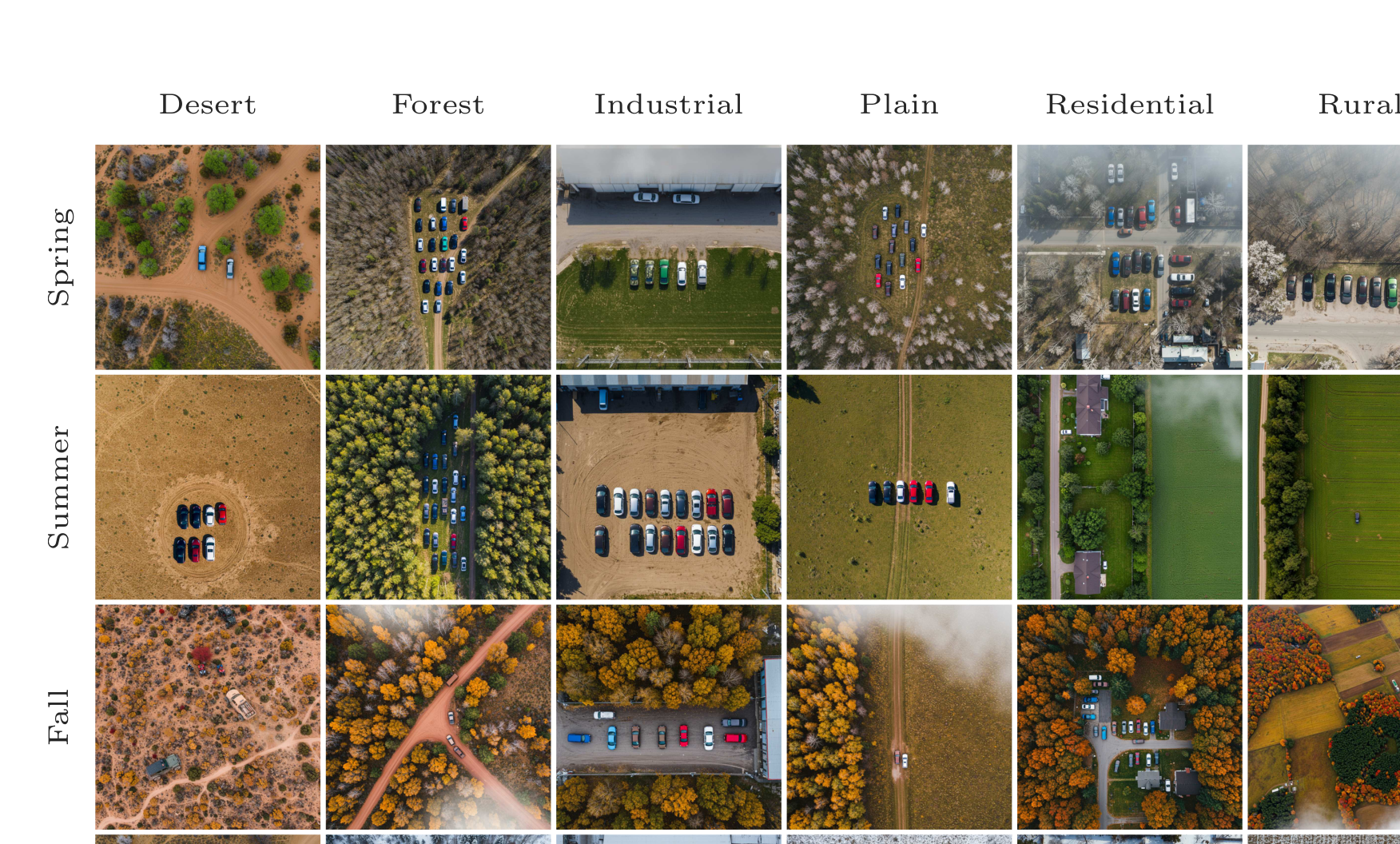
Synthetic aerial imagery across environments and seasons

Diagnosing Aerial-View Object Detectors with Foundational Image Generative Models

Stanislav Panev, Minhyek Jeon, Vaishnavi Khindkar, Ahish Deshpande, Celso M. de Melo, Shuowen Hu, Shayok Chakraborty, Fernando De la Torre

ECCV 2026European Conference on Computer Vision

A synthetic-to-real diagnostic framework that uses foundation image generative models to build attribute-controlled aerial testbeds, exposing systematic detector weaknesses across scene type, season, and weather, and guiding targeted data collection for up to 11% AP50 improvement.

MindReaD cross-modal pedestrian intent estimation

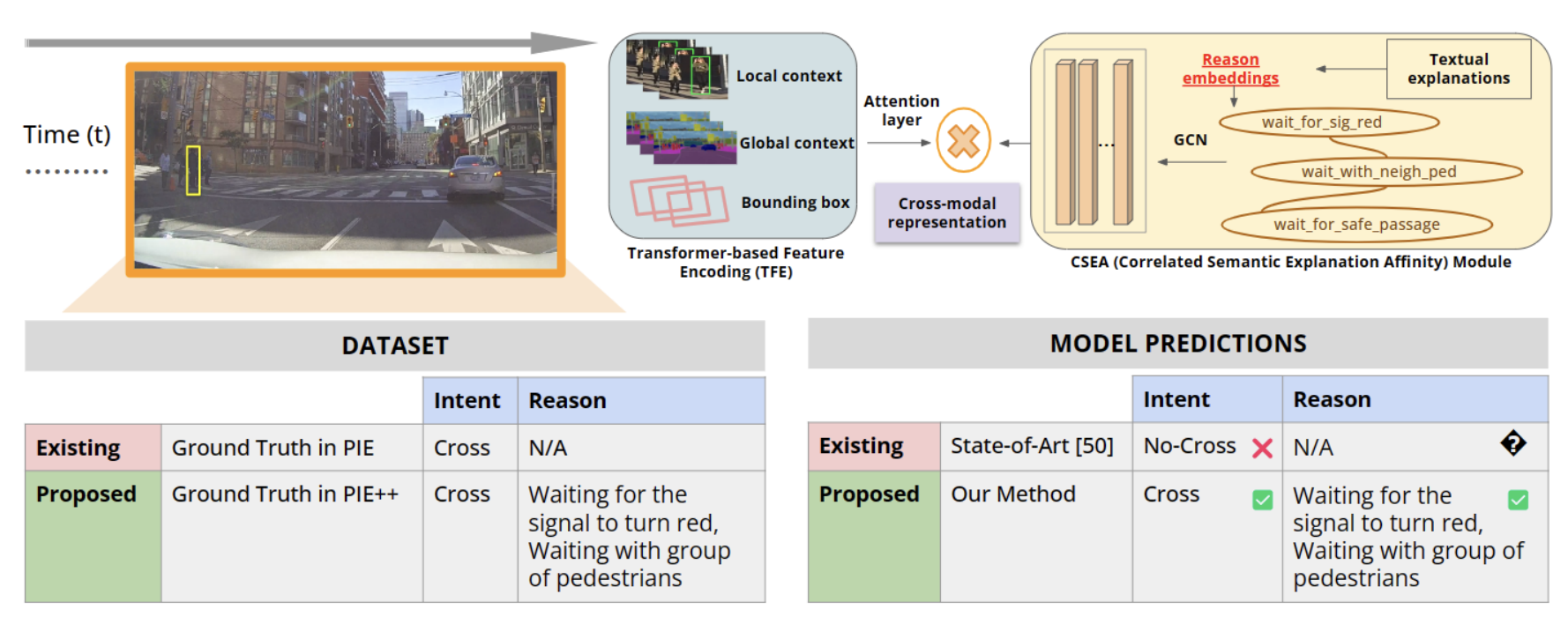
Can Reasons Help Improve Pedestrian Intent Estimation? A Cross-Modal Approach

Vaishnavi Khindkar, Vineeth N. Balasubramanian, Chetan Arora, Anbumani Subramanian, C. V. Jawahar

IROS 2024IEEE/RSJ International Conference on Intelligent Robots and Systems

Introduced MINDREAD, a cross-modal multi-task framework that predicts not just what a pedestrian will do but why, alongside the reason-enriched PIE++ dataset (~909K textual explanations), yielding +5.6% accuracy and +7% F1 over baselines.

ILLUME SAFM residual self-attentive feature alignment

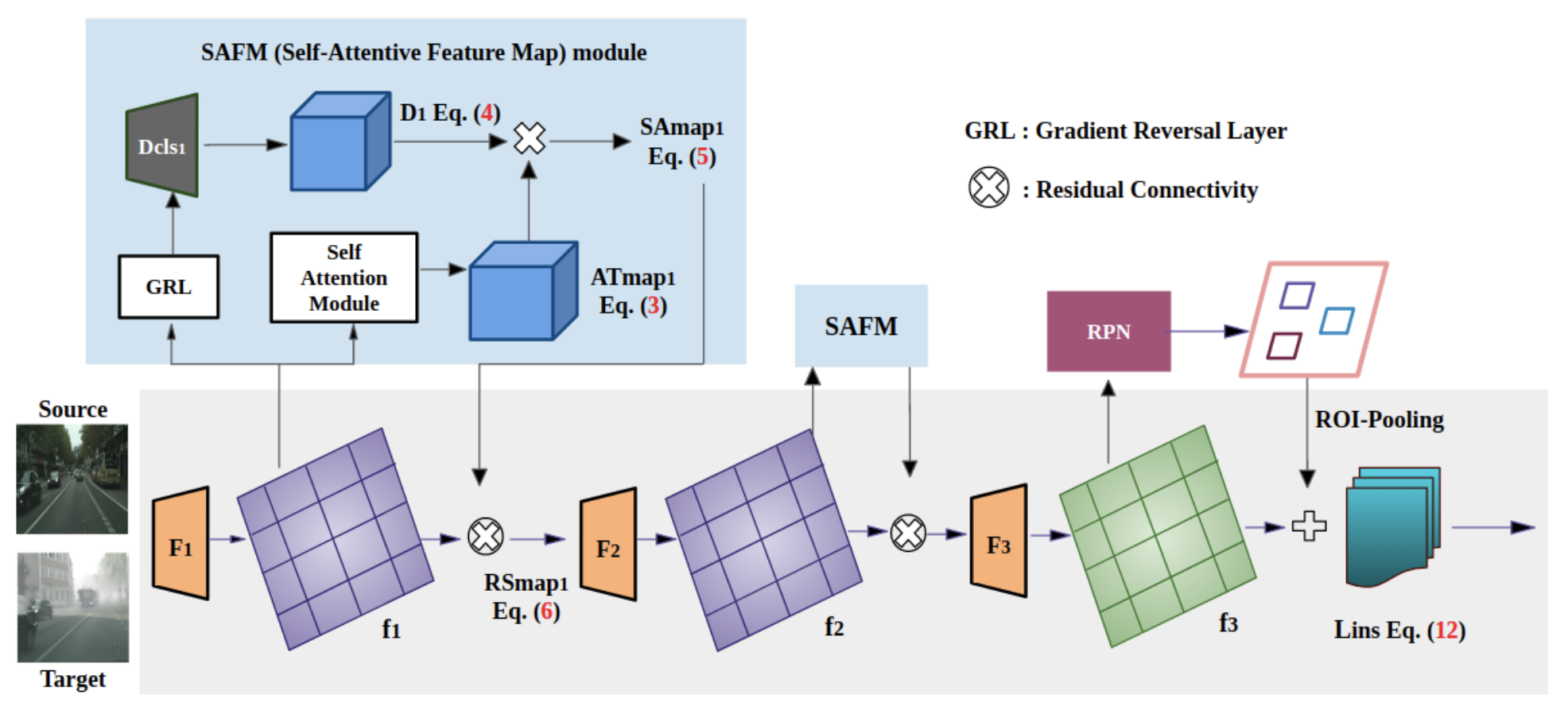
To Miss-Attend Is to Misalign! Residual Self-Attentive Feature Alignment for Adapting Object Detectors

Vaishnavi Khindkar, Chetan Arora, Vineeth N. Balasubramanian, Anbumani Subramanian, Rohit Saluja, C. V. Jawahar

WACV 2022IEEE/CVF Winter Conference on Applications of Computer Vision

ILLUME, a residual self-attentive feature alignment method whose Self-Attention Feature Map (SAFM) module attends to object-related regions, producing domain-invariant features and state-of-the-art adaptive object detection.

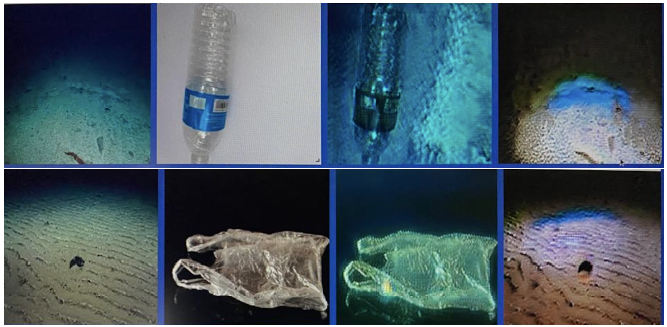
GAMMA marine debris detection results

GAMMA: Generative Augmentation for Attentive Marine Debris Detection

Vaishnavi Khindkar, Janhavi Khindkar

arXiv 2022

An efficient generative augmentation approach that uses CycleGAN to translate abundant in-air plastic imagery into underwater-style images, addressing the scarcity of underwater debris data for visual detection.

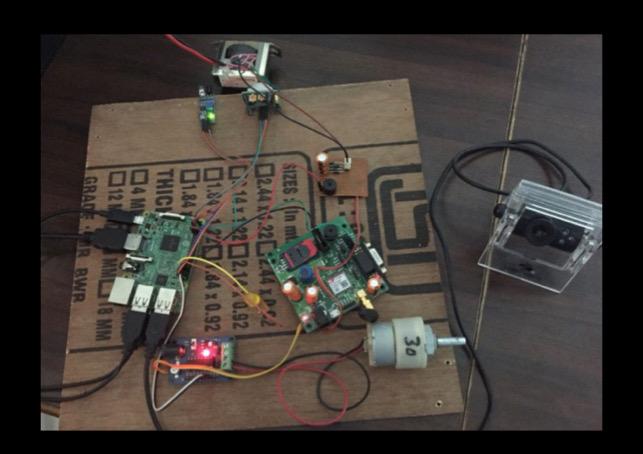
IoT smart home hardware setup

IoT-based Smart Home using Face Recognition

Vaishnavi Khindkar, Aishwarya Koppella, Ashwini Adhau, Sharayu Pardeshi, Mahalaxmi Reddy

IJCRT 2018 · B.E. Thesis

A Raspberry Pi-based home automation and security system that controls appliances and recognizes faces using OpenCV and classical image-processing techniques.

Patents

Experience

Machine Learning Engineering Intern May 2026 – Present
Sync Labs · San Francisco Bay Area

Building applied video generative AI and lip-sync pipelines for production-scale video editing, including shot-level video/audio decomposition, multilingual lip-sync workflows, and scalable inference orchestration.

Graduate Research Fellow May 2026 – Present
Machine Learning Department, CMU · Advisor: Prof. Andrej Risteski · with Dhruv Rohatgi

Studying reward-tilted sampling: principled methods for steering generative models toward target distributions, with a focus on stable, structured sampling.

Graduate Research Assistant, MSCV Capstone Jan 2026 – Present
Robotics Institute, CMU · Advisor: Prof. László A. Jeni

Developing Slot4D, an object-centric 4D reconstruction project bridging low-level geometric tracking with object-level scene understanding, using lightweight Slot Attention adapters over frozen geometric backbones (VGGT / SpatialTracker-style) for dynamic multi-view scenes.

Research Fellow Sep 2025 – May 2026
Carnegie Mellon University · Advisor: Prof. Fernando De la Torre

Used foundation generative models to diagnose and improve aerial-view object detectors under controlled visual attributes, designing synthetic data workflows to expose systematic detector failures across scale, viewpoint, background, occlusion, and appearance.

Applied AI Researcher Oct 2023 – Jul 2025
IIIT Hyderabad (Product Labs · Bhashini, Government of India)

Containerized OCR models with Docker and deployed via NVIDIA Triton, achieving real-time latency (0.11s printed, 0.051s handwritten) across 22 Indian languages.

Junior Research Scientist Aug 2020 – Oct 2023
CVIT, IIIT Hyderabad · Advisors: Prof. C. V. Jawahar, Prof. Vineeth N. Balasubramanian, Prof. Chetan Arora

Where my research really began: leading work on pedestrian intent prediction (MINDREAD, IROS 2024) and domain-adaptive object detection (ILLUME, WACV 2022), building large-scale CV pipelines for detection, intent estimation, and multimodal learning.

Earlier, I spent two years as a Software Developer at Barclays (Pune) before fully turning toward research.

Selected Projects

Slot4D: Object Slots for 4D Reconstruction

MSCV Capstone · Prof. László A. Jeni

Slot4D explores object-centric learning for dynamic 4D scene reconstruction. The project studies whether slot-based grouping can decompose a scene into meaningful object representations using geometric, motion, and appearance cues from 4D reconstruction pipelines. Instead of treating a dynamic scene only as dense point tracks or frame-level features, Slot4D aims to recover object-level structure that can support more interpretable and temporally consistent 4D scene understanding.

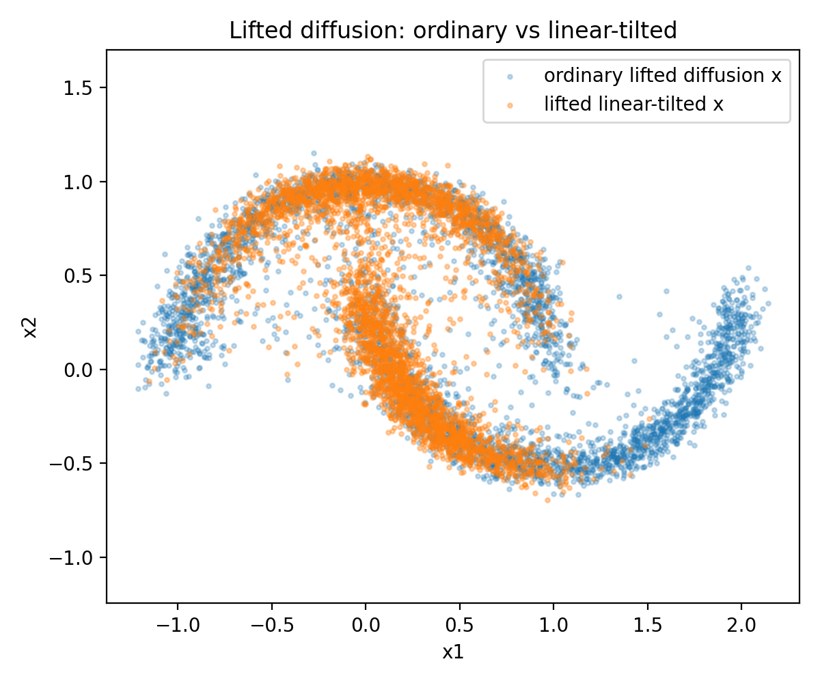
Reward-Tilted Generative Sampling

Prof. Andrej Risteski · with Dhruv Rohatgi

Studying how generative models can be steered toward high-reward outputs by reshaping their sampling distribution. This project investigates reward-tilted distributions, p*(x) ∝ p(x) exp(r(x)), and lift-and-tilt constructions for making reward-guided generation more stable and principled, especially when the reward landscape is complex, indefinite, or non-concave.

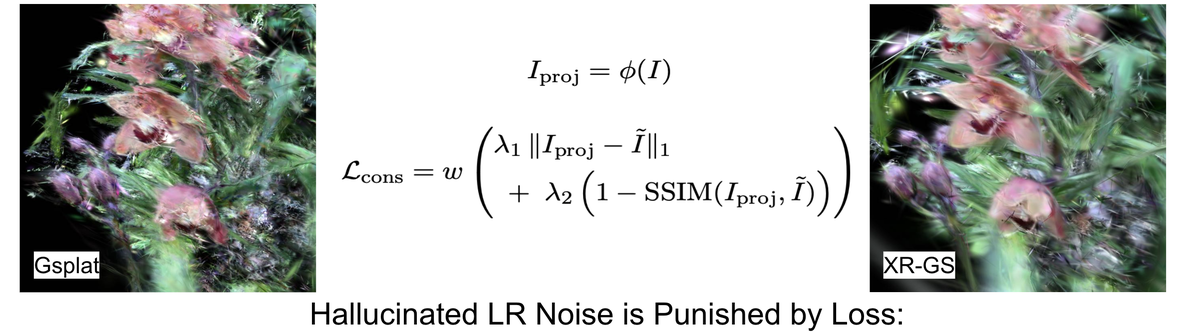
Cross-Resolution Gaussian Splatting

Prof. Shubham Tulsiani

This project tackles 3D Gaussian Splatting when the input views come at very different resolutions, for example a few sharp, high-resolution captures alongside many low-resolution images of the same scene. It studies how to fuse these heterogeneous sources into a single consistent radiance field, using resolution-aware, detail-preserving densification so that fine detail from the high-resolution views is retained rather than washed out by the coarser ones. The goal is high-fidelity reconstruction that makes the most of mixed-quality, real-world image collections.

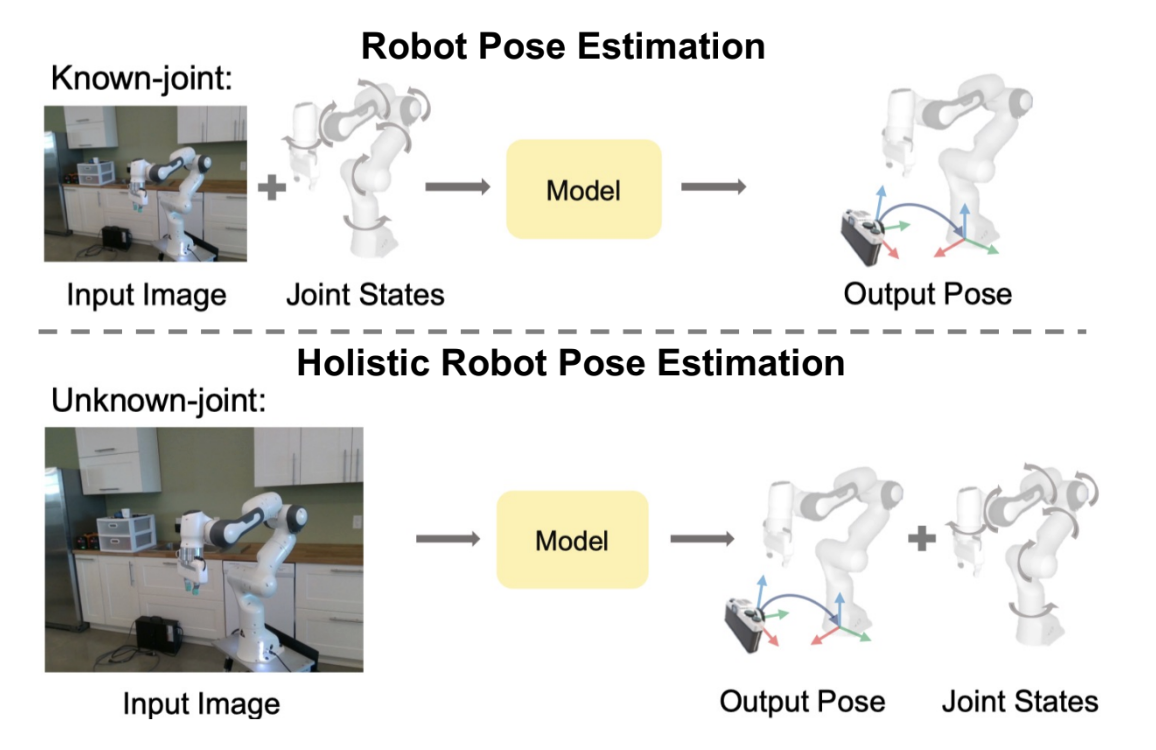
Single-View Holistic Robot Pose Estimation

Prof. Jun-Yan Zhu

Estimating the full pose of a robot, its joint configuration and 2D/3D keypoints, from a single RGB image without depth or known camera-to-robot calibration. The project builds a holistic pipeline trained largely on synthetic data, using domain randomization and synthetic-to-real transfer to bridge the appearance gap and generalize across camera viewpoints and even to robot types unseen during training. Robust single-view pose estimation like this is a step toward lighter-weight perception for manipulation and human-robot interaction.

Show earlier academic & course projectsHide earlier projects

Multi-class Image Classifier on UC Merced Dataset

Classification of a remote-sensing image dataset using a fusion model that combines spatial CNN features with DCT features. A three-layer CNN fusion model with DCT and LBP improves prediction accuracy on the UC Merced LandUse dataset.

Aspect-based Sentiment Analysis on NPS Survey Data

Retail Online Banking

Aspect-based sentiment analysis on Net Promoter Score (NPS) survey data for a retail online-banking platform, to understand customer reviews of features like Payments or Homepage. Built an AngularJS dashboard visualizing per-feature sentiment, helping identify improvements by analyzing negative reviews for specific features.

Geek Quiz

A user-friendly techno-quiz application, built from scratch in Turbo C++ using data structures and OOP, that tests your knowledge across three levels: Computer World Tycoons, Programming Basics, and "Bugzzz… Find me if you can!", advancing only after you earn a badge for the current level.

Loan Application

An Android application to track loans recollected from customers, with two companion apps for owner and employee roles. The owner manages employees and transaction history, while employees are allocated daily collection accounts reflected in a realtime database, cutting down on paperwork.

NGO Helper Application

An Android app that helps people connect with NGOs by easily finding nearby organizations and their information, so they can support local causes through donations or activities like birthday celebrations, contributing toward better living in their community.

Movie Ratings Analyser

A movie-ratings analysis tool built with Qt Creator and MySQL, where a user's ratings and comments for a film of a given year dynamically update the movie's overall rating.

Writing

I occasionally write to share what I've learned, mostly to help others navigating grad-school applications find their own path.

More writing on Medium →

Education & Service

Education

M.S. in Computer Vision Aug 2025 – Dec 2026
Carnegie Mellon University · School of Computer Science
Pittsburgh, PA  ·  GPA 4.11 / 4
Coursework
  • Advanced Computer Vision (16-820)
  • Learning for 3D Vision (16-825)
  • Robot Learning (16-831)
  • Robot Localization & Mapping (16-833)
  • Visual Learning & Recognition (16-824)
  • Intermediate Statistics (36-705)
  • Deep Learning Systems (10-714)

Academic Service

  • Reviewer: CVPR 2025, ECCV 2024, CVPR 2023, ECCV 2022, WACV 2022
  • Mentor: AI4ALL Changemakers in AI (2022) · ML Mentor, IISc (2023)
  • Organizer: Hour of Code, International Coding Week

Technical Skills

PythonC++MATLAB SQLJavaR PyTorchTensorFlowOpenCV NVIDIA TritonDockerAWS GitLaTeX

Focus Areas

  • Generative Modeling & Sampling
  • 3D & 4D Scene Understanding
  • Video Generative AI
  • Object-Centric & Spatial Representations
  • Object Detection & Domain Adaptation